Ten Van Goghs Return to Paris: The Fondation Louis Vuitton Revives Collector Gustave Fayet
Ten paintings by Vincent van Gogh, 78 works by Paul Gauguin and 88 by Odilon Redon have come together in Paris for the first time in a century. On 9 October 2026 the Fondation Louis Vuitton opened Gustave Fayet: Collector – Creator, an exhibition about the wine-grower from Béziers who bought Van Gogh and Gauguin when almost nobody else would. It runs until 8 March 2027.
🖼️ Get this painting as a print →
What: Gustave Fayet: Collector – Creator, an exhibition of more than 250 works from his collection and over 300 of his own designs
Where: Fondation Louis Vuitton, Bois de Boulogne, Paris
When: 9 October 2026 to 8 March 2027
Who: Gustave Fayet (1865–1925), collector of Van Gogh, Gauguin and Redon
Section: Museums & Exhibitions
What happened
According to Sortir à Paris, the show gathers 767 works and documents, borrowed from 64 institutions and 71 private collections. More than 250 of them come from Fayet’s own collection, reunited for the first time in a hundred years, and over 300 are his own creations: paintings, ceramics, carpets, fabrics and wallpapers, many restored for the occasion.
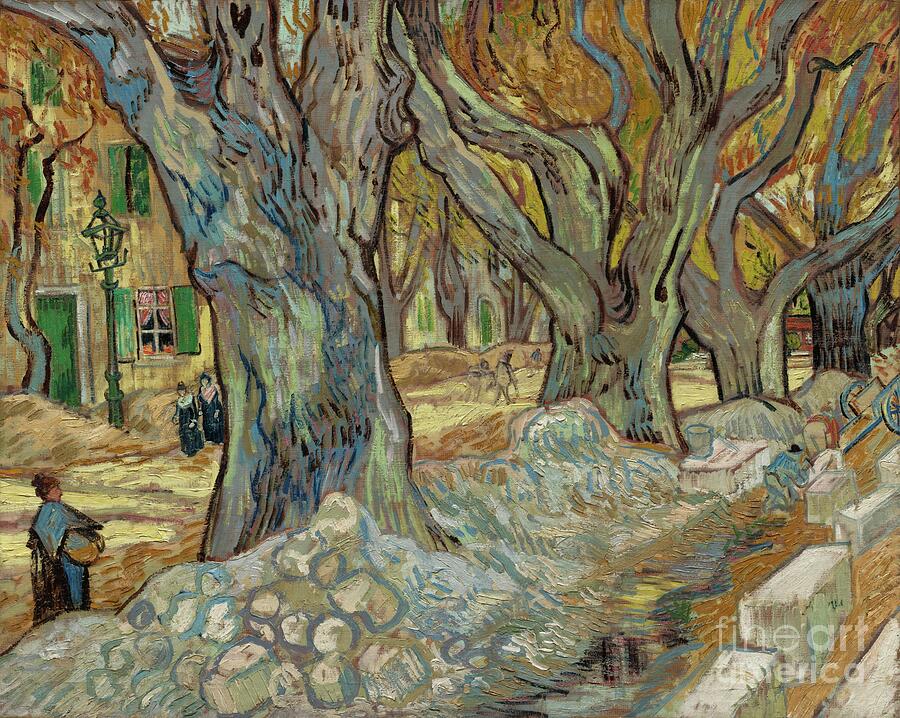
The Art Newspaper reports that the star loan is Van Gogh’s Self-Portrait with Bandaged Ear and Pipe of January 1889, which Fayet bought in 1902 and kept until his death. The painting has not been shown in France since 1937. Around it hang nine more Van Goghs, among them The Large Plane Trees from Cleveland and the Public Garden in Arles, alongside Gauguin’s Yellow Christ and his Self-Portrait with the Yellow Christ. Redon’s three panels Day, Night and Silence, painted for the library of the abbey of Fontfroide, which Fayet bought in 1908, are on public view for the first time.
Why it matters
Fayet was a collector before the market existed. Between 1901 and 1909, The Art Newspaper says, he bought sixteen Van Goghs, all from the last two years in Provence and Auvers, and by 1909 he was one of the four biggest private owners of the painter’s work. He also bought 101 works by Gauguin. When he began, Van Gogh had been dead for more than ten years and Gauguin was living in the South Seas, and neither had much of a market outside a small circle of painters and dealers.
What makes him unusual is that he was a working artist too. He painted, drew, and designed carpets and wallpaper inspired by the colours and rhythms of the pictures he owned. The exhibition puts his own work on the top floor, so visitors can see how a collection can turn into a style.
The painting behind the story
The Large Plane Trees, shown at the top of this story, is one of the pictures Fayet kept until he died. Van Gogh painted it in December 1889 at Saint-Rémy-de-Provence, where he was a patient at the asylum of Saint-Paul. In a letter to his brother Theo he described it as a view of the village where men were repairing the pavements under enormous plane trees, among heaps of sand and stones, with the leaves turning yellow. The gigantic trunks twist across the picture and the small figures of the road menders work at their feet. Fayet bought it in 1904 from the Schuffenecker brothers in Paris; today it belongs to the Cleveland Museum of Art. For more of the painter, see our page of every Van Gogh painting we’ve explained.
Hang Van Gogh’s Large Plane Trees — the twisting trunks, the yellowing leaves, the road menders at work — as a print, canvas or poster from the Sapiens Verbum print shop.
 Choose your size and frame →
Printed and shipped by Fine Art America · 30-day money-back guarantee
💬 Over to you: If you could have bought one painting from Van Gogh or Gauguin in 1901, before anyone cared, which one would you have chosen? Tell us in the comments.
Sources
- The Art Newspaper: A Louis Vuitton foundation exhibition, with ten Van Gogh paintings, reveals the extraordinary vision of an early collector, 9 October 2026
- Sortir à Paris: Gustave Fayet à la Fondation Louis Vuitton
- Artprice: Gustave Fayet at the Fondation Louis Vuitton
- Cleveland Museum of Art: The Large Plane Trees (Road Menders at Saint-Rémy), 1947.209
Comments
Post a Comment