Lost Velazquez Portrait of the Count-Duke of Olivares Rediscovered and Acquired by the Getty
A portrait by Diego Velázquez that had been missing for almost four centuries is heading to Los Angeles. On 24 September 2026, the J. Paul Getty Museum announced that it has acquired the rediscovered Portrait of the Count-Duke of Olivares (c. 1626), the first painting by Velázquez to enter its collection.
What: Velázquez, Portrait of the Count-Duke of Olivares, c. 1626, oil on canvas
Where: J. Paul Getty Museum, Los Angeles (on view from autumn 2026)
When: Acquisition announced 24 September 2026
Who: Identified by Salvador Salort-Pons, director of the Detroit Institute of Arts
Section: Discoveries & Restorations
What happened
The portrait shows Gaspar de Guzmán, Count-Duke of Olivares, the all-powerful minister of King Philip IV, in armour. According to reports by Artnet News and Finestre sull'Arte, it was painted around 1626 as a diplomatic gift for Cardinal Francesco Barberini, the papal nephew who visited Madrid that year. A 1631 inventory of the Barberini collection in Rome describes a head-and-shoulders portrait of Olivares in armour; after that, the painting dropped out of sight.
Until now the composition was known mainly through an engraving by Paulus Pontius, with a frame designed by Peter Paul Rubens, whose inscription credits Velázquez with the original. The canvas resurfaced in a private collection and was identified by Salvador Salort-Pons while he prepared an exhibition on Olivares. Technical examination, including X-rays that revealed changes made by the painter to the costume and armour, supported the attribution. The Getty has not disclosed the price. The portrait goes on view in the Getty Center's East Pavilion this autumn and will then travel to Detroit for the exhibition there from 24 January to 25 July 2027.
Why it matters
New paintings by Velázquez almost never appear. He was a slow, selective painter who spent most of his career working for the Spanish crown, and almost all his major works have been in royal and museum collections for centuries. A securely documented portrait from the 1620s, the years when the young court painter was shaping the image of Philip IV's regime, fills a real gap. It also shows portraiture as politics: a picture of the king's minister, sent to the Pope's family as a gesture of power and friendship.
For American collections it is a milestone too: according to ARTnews, it is the first painting by Velázquez to enter a museum on the West Coast.
The painting behind the story
Velázquez's court portraiture reached its peak three decades later in Las Meninas (1656), at the Prado in Madrid, where the painter placed himself, the royal family and the viewer in the same room. Read our analysis: Las Meninas by Velázquez: What's Really in That Mirror?
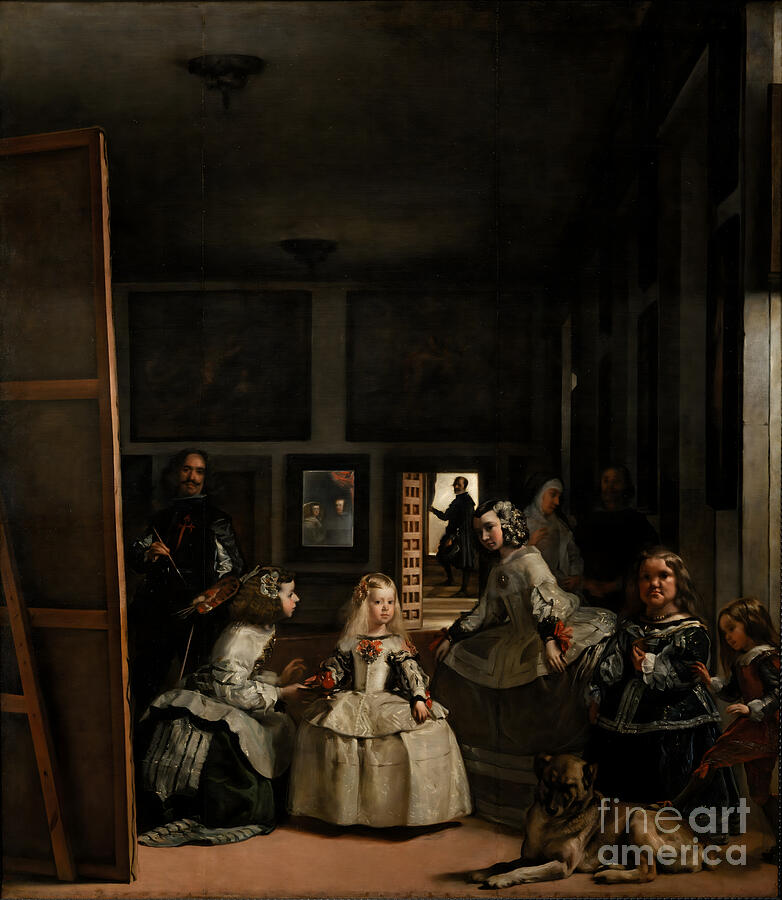
Get Velázquez's Las Meninas as a museum-quality print, canvas, or poster from the Sapiens Verbum print shop.
Shop This Print →
Sources
- Artnet News — The Getty Scoops Up Newly Discovered Velázquez Painting
- Finestre sull'Arte — Velázquez's Rediscovered Portrait of the Count-Duke of Olivares Joins the Getty
- ARTnews — LA's Getty Museum Acquires Recently Rediscovered Velázquez Painting
- Art History News — Getty acquire Rediscovered Velázquez
Comments
Post a Comment